Tracking Technology
The Modern Tracking Problem
Modern global logistics generates an enormous amount of operational data. Shipment events, carrier updates, customs milestones, warehouse activity, and delivery confirmations occur across multiple systems throughout the supply chain.
Traditional shipment tracking technology typically shows only status updates — where freight is, when it departed, and when it is expected to arrive.
But in complex global logistics environments, visibility alone is not enough.
Manufacturers, distributors, and project logistics teams need the ability to identify potential disruptions early and react before delays cascade through the supply chain.
That requires more than shipment tracking. It requires a structured approach to managing the information that surrounds the movement of freight.
Introducing The Information Supply Chain®
Modern global logistics generates an enormous amount of operational data. Shipment events, carrier updates, customs milestones, warehouse activity, and delivery confirmations occur across multiple systems throughout the supply chain.
Traditional shipment tracking technology typically shows only status updates — where freight is, when it departed, and when it is expected to arrive.
But in complex global logistics environments, visibility alone is not enough.
Manufacturers, distributors, and project logistics teams need the ability to identify potential disruptions early and react before delays cascade through the supply chain.
That requires more than shipment tracking. It requires a structured approach to managing the information that surrounds the movement of freight.
AIMS Powers The Information Supply Chain®
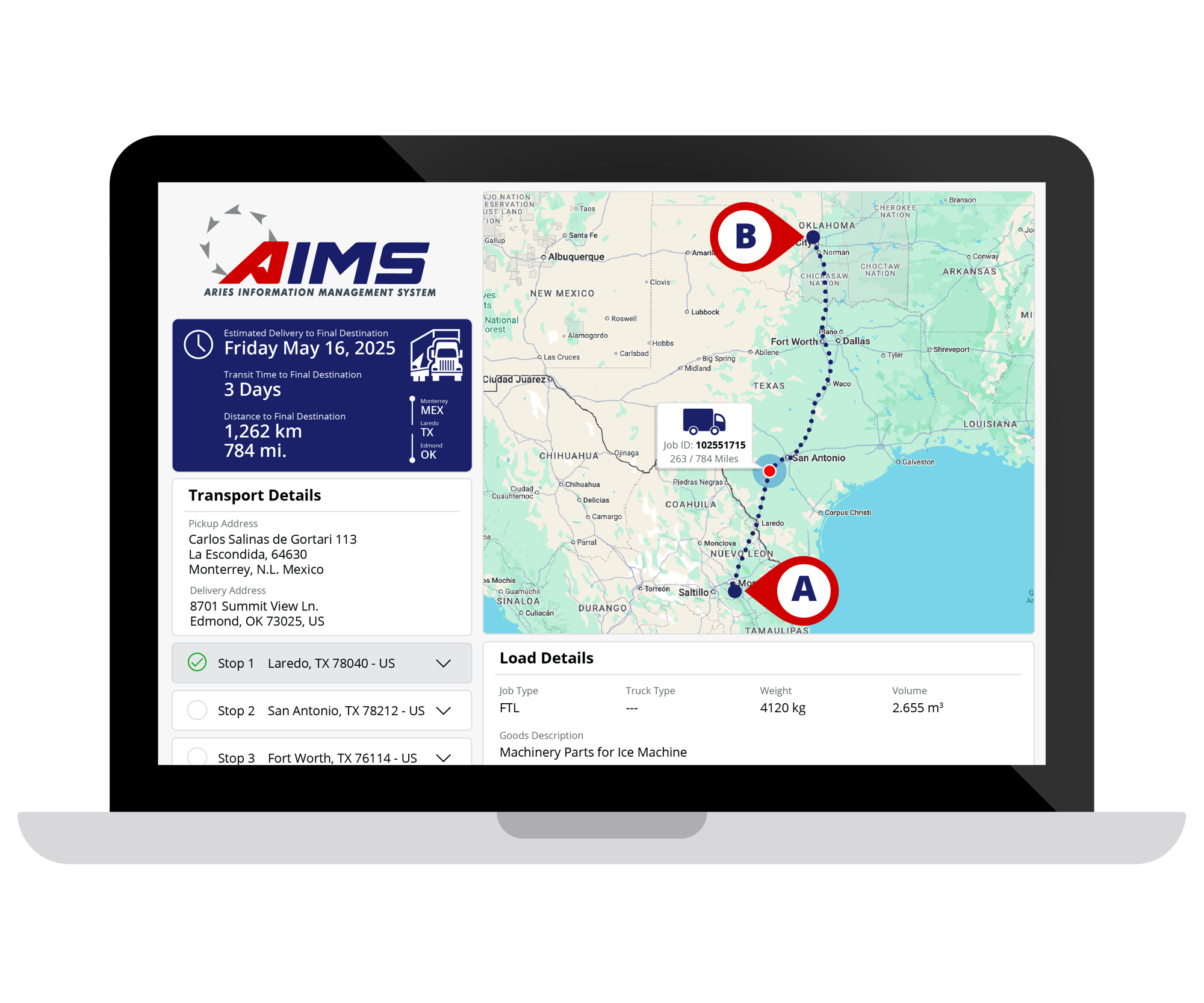
AIMS (Aries Information Management System) powers the Information Supply Chain.
AIMS captures operational data across shipments, carriers, customs processes, warehouses, and transportation networks, consolidating that information into a unified visibility platform.
This allows customers to:
-
Monitor global shipments in real time
-
Detect potential delays and logistics exceptions early
-
Coordinate responses with their Aries logistics team
-
Maintain visibility across international freight movements
-
Access documentation and shipment history instantly

Tracking Technology Designed for Operational Control
-
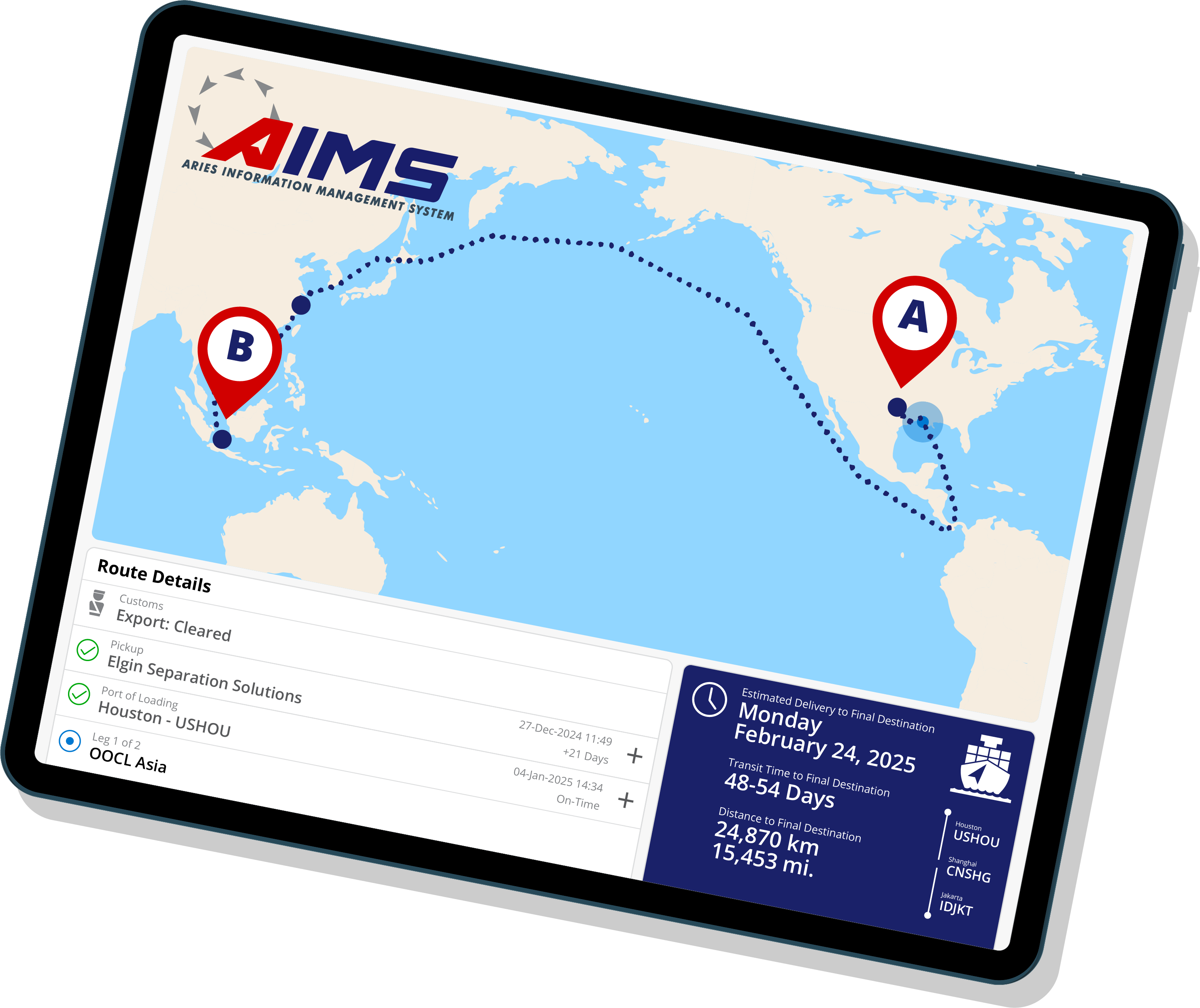
Through AIMS, customers gain access to:
- Command Center Dashboard
A centralized view of shipments, operational status, and logistics performance across the supply chain.
- Shipment Explorer
Detailed shipment tracking, event timelines, and documentation access for every shipment.
- Live Vessel Tracking
Real-time vessel location data and ocean freight tracking for international shipments.
- Alerts and Notifications
Proactive notifications when shipment events occur or potential delays are detected.
- Document Visibility
Instant access to shipment documentation, customs records, and transportation details.
Visibility, Predictability, and Confidence
In today’s global supply chain environment, the difference between reactive logistics and controlled logistics is information.
By connecting the physical movement of freight with the operational data surrounding it, Aries enables customers to operate within the Information Supply Chain — where visibility leads to faster decisions, better coordination, and more predictable outcomes.
Through AIMS and the Information Supply Chain, Aries helps customers maintain control over complex global logistics operations.
